Bobcat Trencher & Digger Attachments for Utility Installation & Excavation
Dig Smarter, Trench Faster, Get the Job Done Right
Make quick work of digging and trenching projects with powerful Bobcat trencher and digger attachments. Designed for precision and efficiency, these attachments help you cut clean trenches, move soil, and prepare the ground for underground utilities, irrigation systems, drainage lines, and more.
Trencher Attachments for Irrigation, Drainage & Utility Lines
A trench sounds simple: long, narrow and the same depth from end to end. Digging one with a shovel, or even a bucket, is anything but.
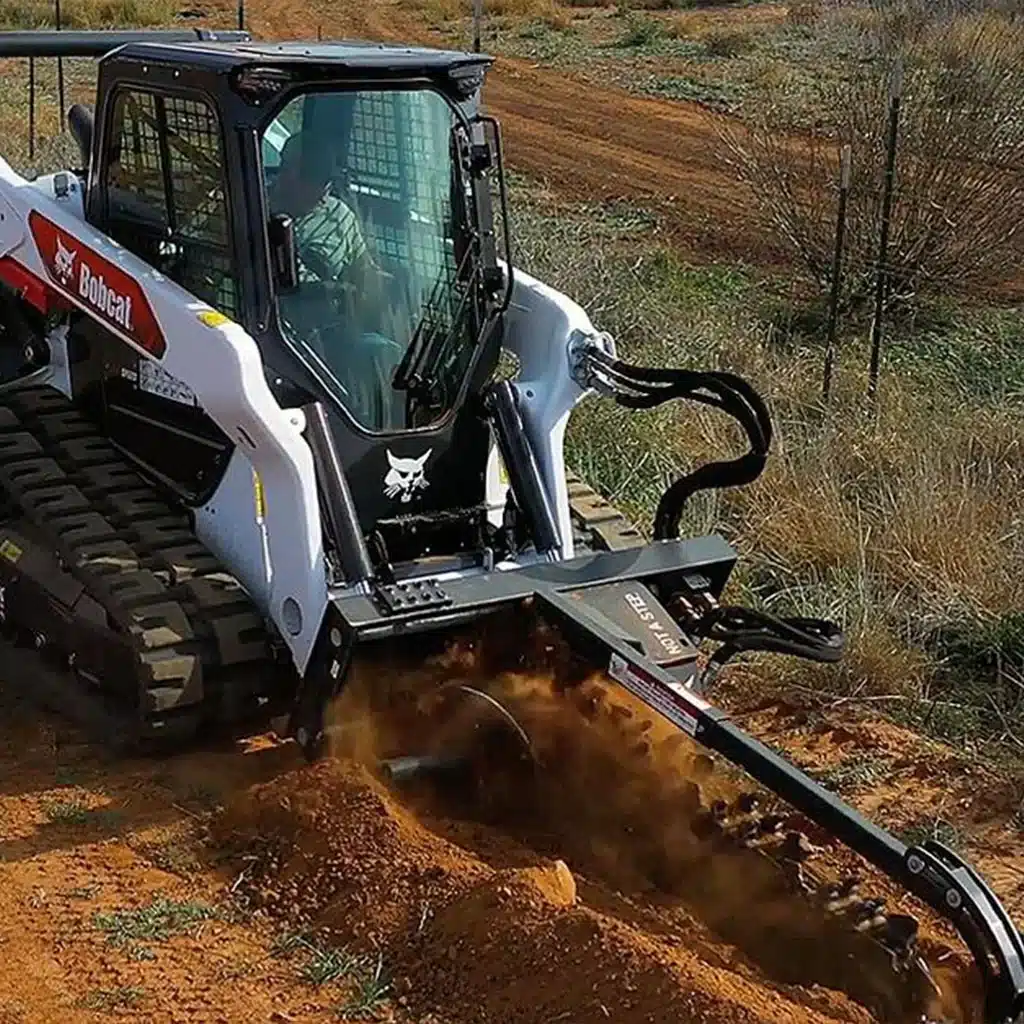
A trencher attachment cuts a clean, even trench in one pass and piles the dirt neatly beside it, ready to backfill. It turns a weekend of digging into an afternoon of work.
How a Trencher Works
A trencher works a lot like a chainsaw for dirt. A chain lined with digging teeth runs around a long boom. As the chain turns, the teeth cut into the ground and carry soil up out of the trench. A spiral auger at the top moves that soil off to the side so it doesn't fall back in.
Lowering the boom sets the depth. Many trenchers also have a crumber that cleans loose soil from the bottom of the trench, and side shift that slides the boom left or right so you can dig close to walls, fences and foundations.
Tips for Cleaner Trenches
Call 811 before you dig. It's free, and it marks buried utility lines along your route.
Walk the route first and clear rocks, roots and debris you can see.
Travel slowly and steadily, and let the chain set the pace.
Keep chain tension adjusted. A loose chain wears fast and can jump off.
Replace worn teeth before they slow you down.
What You Can Do With a Trencher
Anything that has to go underground in a straight line.
Install irrigation
Run irrigation lines for lawns, gardens and sports fields.
Dig drainage
Dig French drains, downspout runs and foundation drains.
Bury electrical
Bury electrical and low-voltage lines for lighting, gates and outbuildings.
Lay water lines
Lay water and service lines to barns, shops and new homes.
Run fiber & cable
Run fiber and cable for internet and communications.
Cut narrow footings
Cut narrow footings for landscape walls and edging.
Common Types of Trenchers & Diggers
Four tools, from long utility runs to spot digging and pavement cuts.
Chain Trenchers
The standard choice for long, straight runs at a set depth. Sizes range from small units for mini track loaders to heavy models for full-size loaders.
Diggers
A shorter, simpler tool for spot digging, short trenches, removing rocks and stumps, pruning roots and transplanting shrubs.
Vibratory Plows
These pull pipe or cable through the ground with a vibrating blade, leaving only a thin slit in finished lawns.
Wheel Saws
A spinning toothed wheel that cuts narrow trenches through asphalt and concrete for street and utility work.
How to Choose the Right Trencher
Four quick checks and you'll land on the right setup.
Depth and width
Start with what you're burying and how deep it needs to go. Trenchers are rated for a maximum dig depth.
Soil type
Standard teeth handle dirt and sand. Rock or combination teeth hold up better in clay and rocky ground.
Length of the job
Long, repeated runs call for a trencher. Short trenches and spot digging may only need a digger.
Your machine
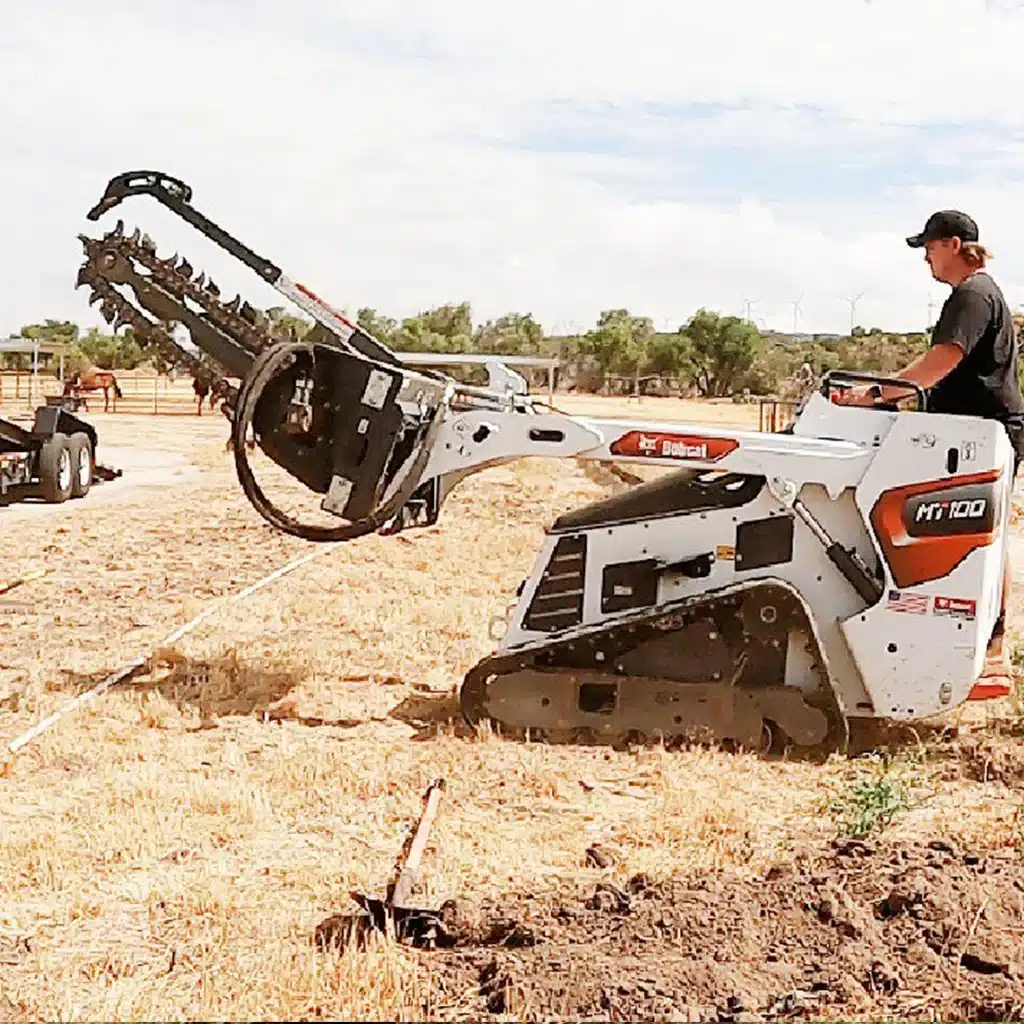
Mini track loaders fit through gates and work in finished yards. Larger loaders dig deeper and faster. Check that your hydraulic flow matches the trencher.
Frequently Asked Questions
How deep can a trencher dig?
What's the difference between a trencher and a digger?
Can a mini track loader run a trencher?
What teeth should I use in rocky ground?
Find the Right Trencher
Browse every trencher and digger we carry. Not sure how deep you need to go? Give us a call and we'll match a trencher to your machine, your soil and your run.