Grapple Attachments for Land Clearing & Cleanup
Clamp down, carry it all, leave the dirt behind
A bucket is built to scoop. It isn’t built to hold onto a pile of tree limbs, a tangle of roots or a load of scrap that keeps sliding off the edge.
Grapple Attachments for Land Clearing & Cleanup
A bucket is built to scoop. It isn't built to hold onto a pile of tree limbs, a tangle of roots or a load of scrap that keeps sliding off the edge. That's what a grapple is for.
A grapple adds hydraulic arms that clamp down over the top of the load. You slide the bottom under the material, close the arms, and carry it wherever it needs to go without losing half of it on the way.
It's our best-selling attachment category, because nearly everyone with land, a job site or a farm has awkward material to move — brush after a storm, roots pulled from overgrown ground, logs waiting to be stacked, scrap headed for the dumpster.
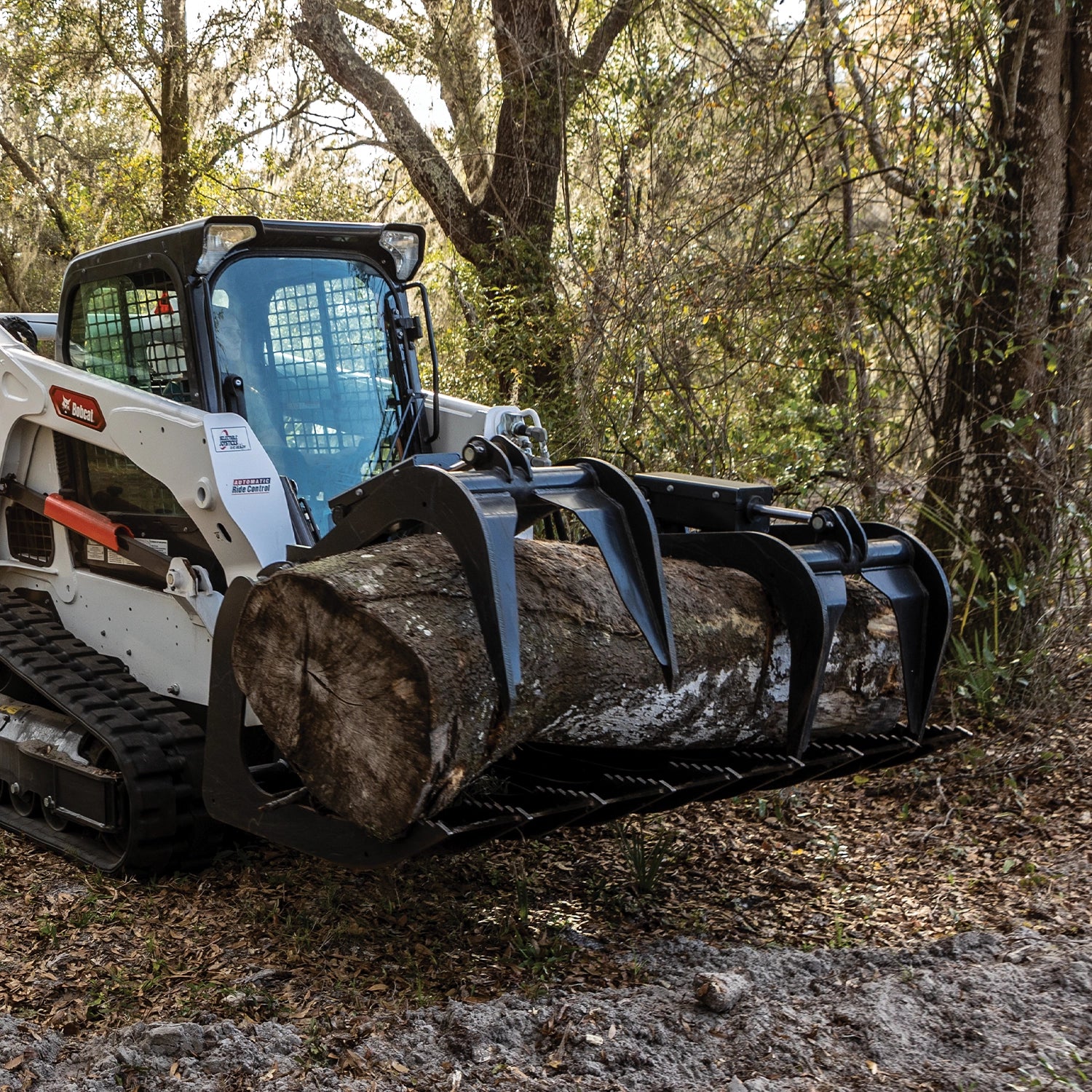
How a Grapple Works
Every grapple has two parts. The bottom is a set of tines or a bucket that slides under the load. The top is one or two clamping arms driven by hydraulic cylinders. The arms run off your machine's auxiliary hydraulics, so you open and close them from the cab with the same controls you'd use for any hydraulic attachment.
Many grapples have an open, skeletal bottom. Dirt and small rocks fall through the gaps while you carry brush, roots or debris — so you move the trash and leave the topsoil where it belongs. On grapples with two independent arms, each arm can close on its own, which lets the grapple hold uneven loads like a pile of mixed branches or a log that's thicker at one end.
Carry loads low and travel slowly, especially on slopes.
Use the grapple to grab and carry. Prying stumps or pushing like a dozer can bend tines and arms.
Grease the pivot points regularly and check the hoses for wear or pinch points.
Inspect tines and welds for cracks, especially after heavy land clearing.
What You Can Do With a Grapple
If it's awkward, heavy and needs to go somewhere, a grapple moves it.
Clean up after storms
Pick up fallen limbs and downed trees and carry them to a burn pile or trailer.
Clear land
Pull out roots, brush and small stumps, and shake the dirt loose before you haul them off.
Handle logs & firewood
Pick up, stack and load logs without chains or extra hands.
Move rock & concrete
Sort stones and broken concrete out of the soil and carry them away.
Load demolition debris
Grab scrap, lumber and rubble and drop it straight into a dumpster.
Do farm chores
Move hay, bedding, manure and fencing material around the barn and pasture.
Clean up fence lines
Gather brush and old wire from along the fence without the hand work.
Common Types of Grapples
Five builds, each aimed at a different kind of material.
Root Grapples
Long, curved tines dig into the ground to pull roots and brush, and the open frame sifts out dirt as you lift. The most popular choice for property owners and contractors clearing overgrown ground.
Industrial Grapples & Grapple Buckets
Heavier and stronger, built for demolition, scrap and construction debris. Choose a bucket bottom to hold loose and fine material, or a fork bottom when you want dirt to fall through.
Brush Grapples
A lighter design made mostly for compact tractors. Less weight on the front of the machine means more capacity left over for the load itself.
Log Grapples
Rounded jaws that wrap around logs, poles and pipe, so round material doesn't roll out.
Rock Grapples
A rock bucket bottom with clamping arms. It lets you sift rock out of the soil, then carry the rock away.
How to Choose the Right Grapple
Work through these five, in order, and you'll land on the right one.
Start with the material
Brush and roots point to a root grapple. Scrap and rubble point to an industrial grapple. Logs point to a log grapple.
Match your machine
Check your mounting system and make sure you have auxiliary hydraulics to run the clamp. On a compact tractor, you may need a third-function valve added to the loader.
Count the weight
The grapple's own weight comes out of your machine's rated lifting capacity. A heavy grapple on a small machine leaves very little capacity for the load.
Pick the width
A grapple at least as wide as your tracks or tires protects them and keeps the machine stable. Wider isn't always better on a smaller machine.
Decide on one arm or two
A single wide clamp works well for uniform loads. Two independent arms hold uneven loads more securely.
Frequently Asked Questions
What's the difference between a root grapple and a grapple bucket?
Can I put a grapple on my compact tractor?
What size grapple do I need?
Do grapples need high-flow hydraulics?
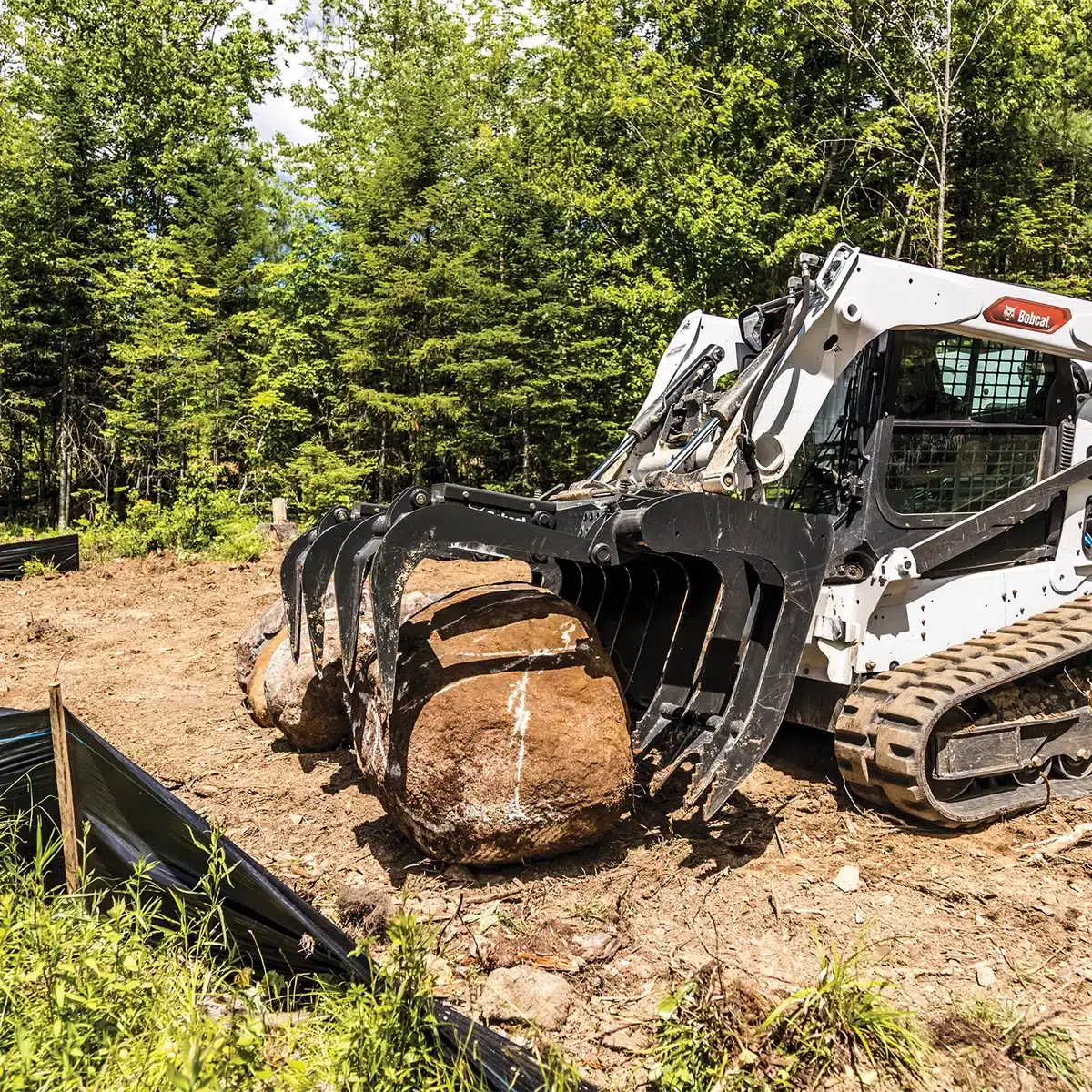
Find the Right Grapple
Browse every grapple we carry and compare sizes for your machine. Not sure which one fits? Give us a call and we'll match it to your loader and your workload.