Bobcat Breaker & Hammer Attachments for Concrete Demolition & Rock Breaking
Break Through Tough Jobs with Power and Precision
Take on demanding demolition jobs with powerful Bobcat breaker and hammer attachments. Designed to break through concrete, asphalt, rock, and other tough materials, these hydraulic attachments deliver the impact force and performance you need to tackle challenging jobs with confidence.
Breaker & Hammer Attachments for Concrete, Rock & Asphalt
When an old driveway, a foundation or a buried boulder has to go, a jackhammer and a crew can take days. A breaker attachment does the same work from the seat of your machine, in a fraction of the time.
Breakers deliver hundreds of heavy blows per minute through a hardened steel tool. Concrete, rock and asphalt crack into pieces small enough to pick up with a bucket or grapple.
How a Breaker Works
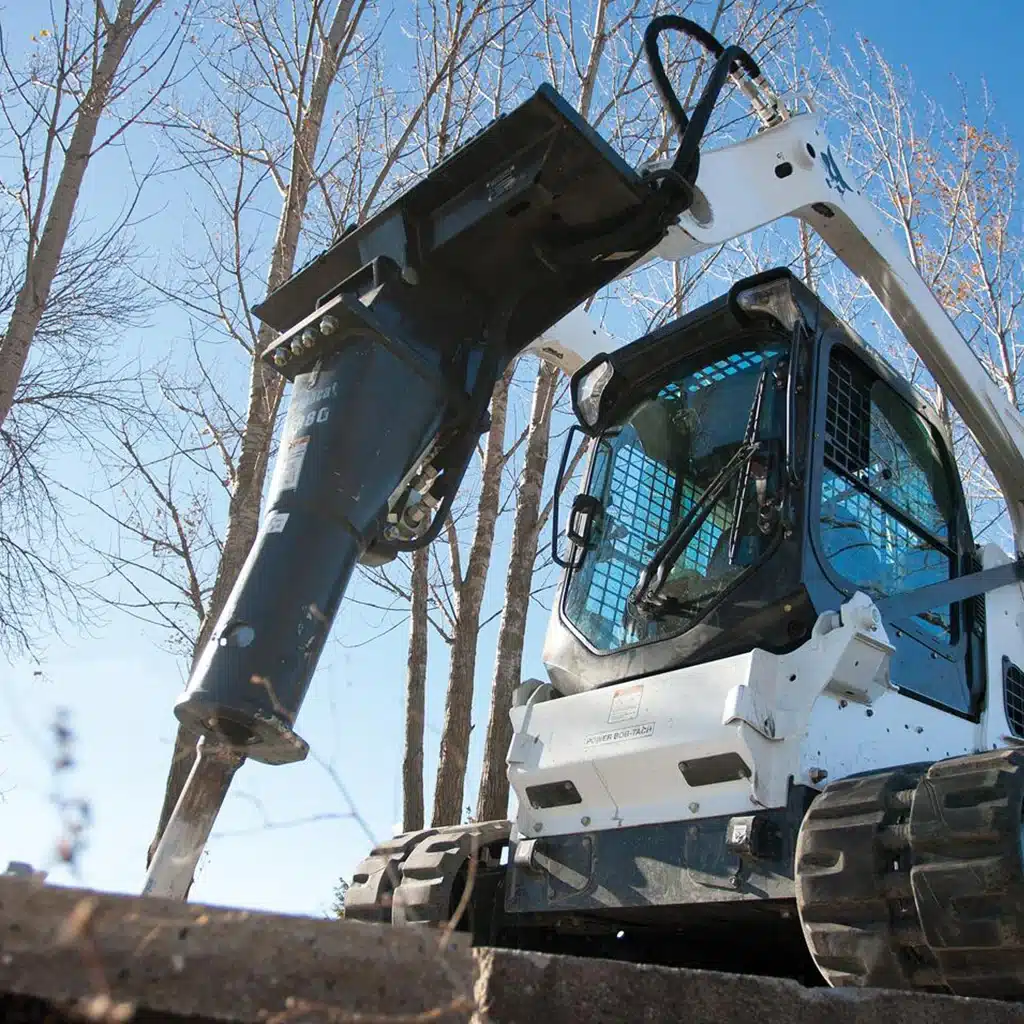
Inside a hydraulic breaker, oil from your machine drives a heavy piston up and down. On every stroke, the piston strikes the top of a steel tool, and the tool passes that energy into the material. Your machine holds the breaker in place and adds down pressure while you move from spot to spot.
Some breakers add a charge of nitrogen gas that pushes the piston down harder on each stroke, for more hitting power from the same machine. A drop hammer works differently — it lifts a heavy weight and lets it fall, splitting large slabs with slow, powerful blows.
Tips for Safe, Efficient Breaking
Start near an edge or crack and work inward. Concrete breaks more easily where it has somewhere to go.
Don't hammer one spot for too long. If it hasn't broken after several seconds, move the tool and try again.
Keep the tool against the material. Firing the breaker with nothing under the tool damages it.
Grease the tool often. Most breakers need it every couple of hours of use, so check your manual.
Keep people well back from flying chips, and wear hearing and eye protection.
What You Can Do With a Breaker
If it's concrete, rock or asphalt and it has to come out, a breaker does it.
Remove driveways & slabs
Break out driveways, sidewalks and patios before replacing them.
Demo footings & foundations
Break up footings and foundations during demolition.
Clear rock from trenches
Clear rock from trench lines, building pads and site prep.
Break boulders
Break oversized boulders into pieces you can haul.
Open pavement
Open pavement for utility repairs and road work.
Interior demolition
Do interior demo with smaller machines in tight spaces.
Common Types of Breakers & Hammers
Three breaker styles, plus the tools that change how they hit.
Hydraulic Breakers
The all-purpose choice. They give you precise, controlled breaking on slabs, curbs, footings and repairs, and they work well in tight spaces.
Nitrogen Breakers
Nitrogen-assisted breakers hit harder for their size. A good fit for thick or reinforced concrete and hard rock.
Drop Hammers
Best for large, flat concrete slabs. The slow, heavy blows fracture concrete below the surface with less noise and vibration than a breaker.
Breaker Tools
Swapping the tool changes how the breaker hits. A moil point is the general-purpose tool; a chisel controls the crack direction; a blunt tool breaks boulders and thick slabs; an asphalt cutter slices pavement.
How to Choose the Right Breaker
Four quick checks and you'll land on the right breaker.
Match the machine first
Breakers are sized by machine weight and hydraulic flow. Too little flow and the breaker hits weakly; too much can damage it.
Think about the material
A thin patio slab and a thick reinforced footing need very different impact energy.
Loader or excavator
Loaders work well on flat slabs. Excavators reach down into trenches and up onto walls.
Plan for dust and noise
A water kit helps control dust on streets and near buildings.
Frequently Asked Questions
What's the difference between a hydraulic breaker and a nitrogen breaker?
Can I run a breaker on a skid steer?
How often should I grease a breaker?
Which breaker tool should I use?
Find the Right Breaker
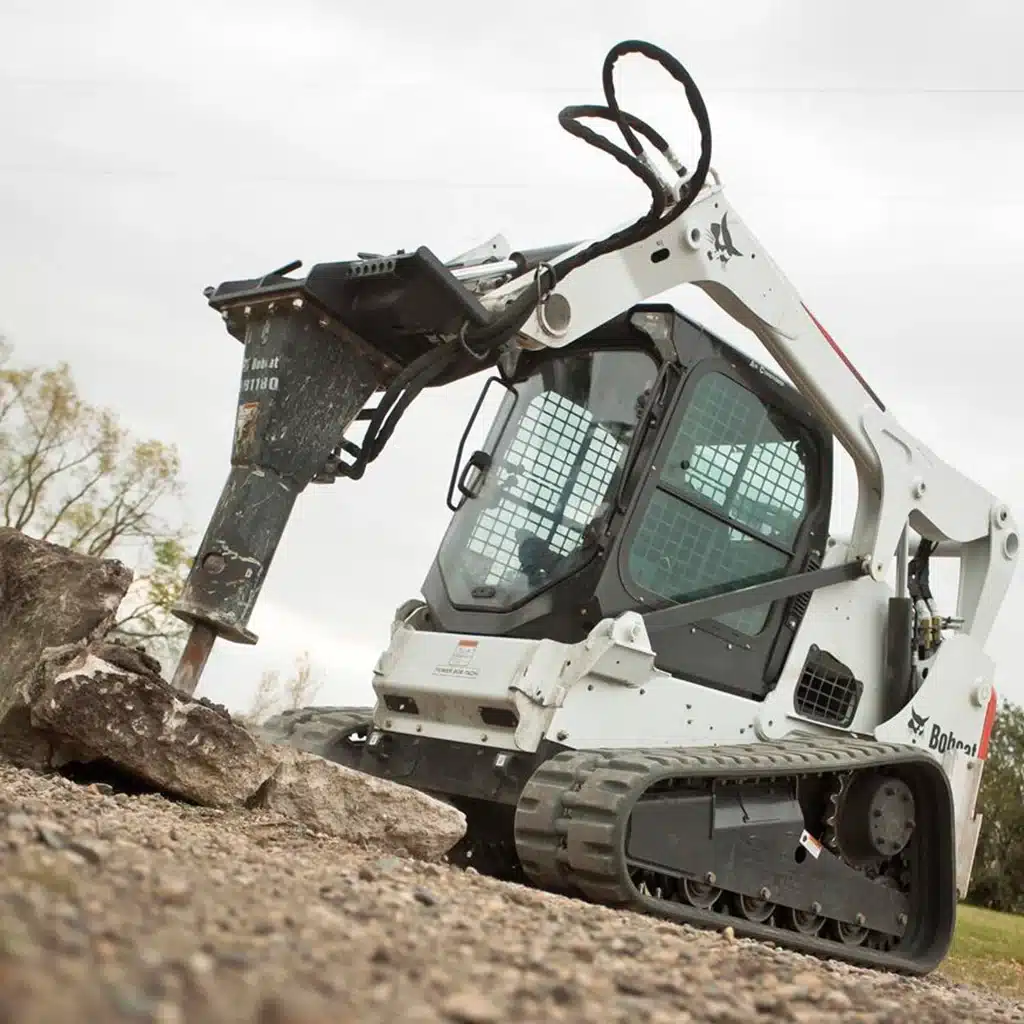
Browse every breaker and hammer we carry. Want help matching one to your machine? Give us a call and we'll size it to your loader or excavator and the material you're breaking.