Auger Attachments for Digging, Drilling & Post Hole Installation
Dig Deeper, Drill Faster, Get More Done
Dig with precision and power using genuine Bobcat auger attachments. Built for efficient hole drilling in a variety of soil conditions, Bobcat augers make quick work of fence posts, footings, landscaping projects, and more. Find the right auger attachment to maximize the versatility of your Bobcat equipment.
Auger Attachments for Post Holes, Footings & Planting
Digging holes by hand is slow, tiring work, and a hand-held post hole digger isn't much better. An auger attachment turns your machine into a drill that bores a clean, round hole in seconds.
Whether you're setting a fence line, pouring deck footings or planting a row of trees, an auger digs every hole the same size and depth, with no shovel work afterward.
How an Auger Works
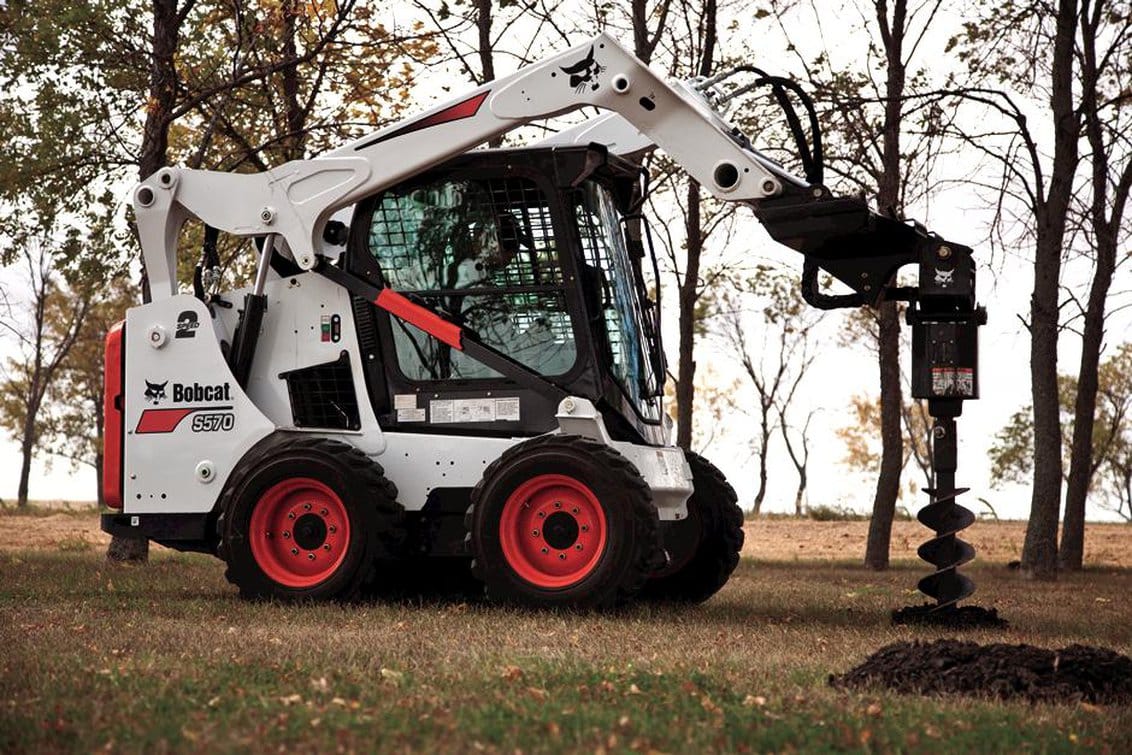
An auger has two main parts. The drive unit mounts to your machine and holds a hydraulic motor and gearbox. The bit is the spiral blade that does the digging. Teeth at the tip cut into the ground, and the spiral — called flighting — lifts the soil up and out of the hole.
The gearbox turns your machine's hydraulic flow into torque, the twisting force that drives the bit through hard ground. Bits come in different diameters and lengths, and they swap on and off the same drive unit, so one auger can dig a 6-inch post hole in the morning and a 24-inch planting hole in the afternoon. Extensions add depth when you need to go deeper than the bit alone.
Tips for Better Holes
Call 811 before you dig. It's free, and it marks buried utility lines so you don't hit one.
Check that the auger is plumb from two directions before you start the hole.
Let the auger pull itself into the ground. Pushing down too hard can stall the bit.
Lift the bit out every so often to clear soil from the hole.
Replace worn teeth and the pilot point at the tip before they slow you down.
What You Can Do With an Auger
If it goes in the ground, an auger digs the hole for it.
Set fence posts
Dig plumb holes for pasture, privacy and livestock fencing.
Pour footings
Dig footings for decks, porches, carports and pole barns.
Set signs & mailboxes
Install signs and mailboxes with consistent, plumb holes.
Plant trees & shrubs
Dig holes sized to the root ball for trees and shrubs.
Drill pier holes
Bore pier holes for foundations and ground-mounted posts.
Set poles
Place utility and light poles on commercial sites.
Common Types of Augers
Three drive styles, plus the bits that match your ground.
Loader Auger Drives
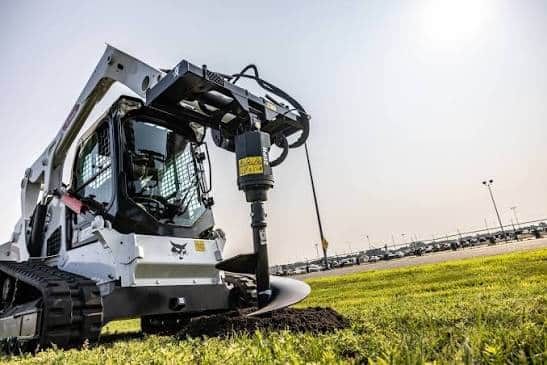
Mount to skid steers, compact track loaders and mini track loaders. The loader's arms give you down pressure and control, and you can see the bit from the cab.
Excavator Augers
Use the excavator's reach to drill on slopes, over obstacles and in spots a loader can't get to. The boom makes it easy to keep the hole plumb.
Three-Point Post Hole Augers
Mount to the back of a compact tractor and run off the PTO. A simple, affordable choice for fence work around the farm.
Bits & Teeth
Standard earth bits handle most soil. Rock bits with carbide teeth handle clay, shale and rocky ground. Larger tree bits dig wide, shallow planting holes.
How to Choose the Right Auger
Work through these five and you'll land on the right setup.
Know your ground
Soft soil and sand dig easily. Heavy clay, rock and compacted fill need more torque and the right teeth.
Torque or speed
Higher torque pushes through hard ground and turns large bits. Higher speed digs faster in soft soil. Pick for the ground you dig most.
Match your hydraulics
Every drive unit is built for a range of hydraulic flow. Make sure your machine's flow falls inside it.
Size the hole
For posts set in concrete, a common rule of thumb is a hole about three times the width of the post. For trees, dig two to three times wider than the root ball.
Plan the depth
Add bit extensions when footings or poles call for deeper holes than a standard bit can reach.
Frequently Asked Questions
Do I need high-flow hydraulics to run an auger?
What size auger bit do I need for fence posts?
How deep can an auger dig?
Can an auger dig through rock and clay?
Find the Right Auger
Browse every auger drive and bit we carry. Not sure what your machine can run? Give us a call and we'll match a drive and bit to your loader and your ground.